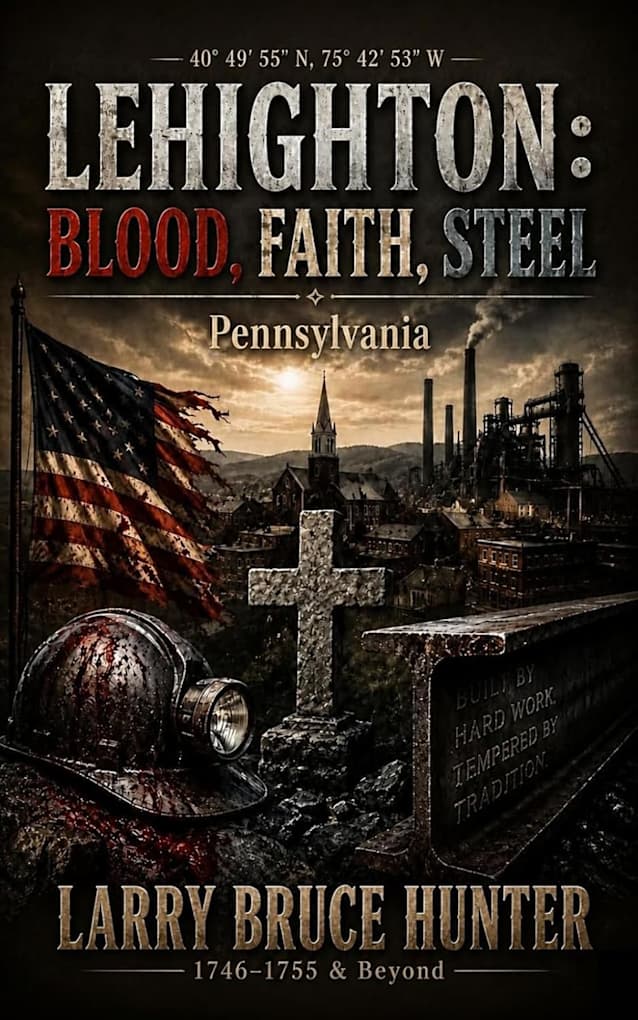
Lehighton:
About
Lehighton: Blood, Faith, and Steel is the story of Gnadenhütten, Pennsylvania, is one of hope, growth, and tragedy. Founded in 1746 by Moravian missionaries, this mission village served as a beacon of light for the Lenape (Delaware) and Mahican peoples. The name Gnadenhütten translates to "Tents (or Cabins) of Grace," reflecting its purpose as a place of refuge and faith.
For nearly a decade, from 1746 to 1755, Gnadenhütten blossomed into a thriving community. It became home to hundreds of Native American converts who found solace and support within its bounds. The spirit of cooperation and friendship between cultures flourished during this vibrant period.
Tragically, this era of peace came to a devastating end on November 24, 1755, during the French and Indian War. In a brutal attack, Native American warriors allied with the French assaulted the settlement, leading to the loss of eleven Moravian missionaries and settlers, and the village was consumed by flames. This marked the beginning of the end for Gnadenhütten, which was never reestablished in its original location.
After the horror of the Gnadenhütten Massacre, the area lay abandoned for years, until it eventually saw new settlement. Fast forward to 1866, and the borough of Lehighton emerged right near the site of this poignant piece of history.
So, if you’re exploring the legacy of the original Moravian settlement known as Gnadenhütten, remember that it thrived from 1746 to 1755—a brief yet impactful chapter in the story of Pennsylvania’s past.